I agree with you on being annoyed about “hidden fees.” Not long ago restaurants were adding on charges like “fuel surcharge” when gas prices went up. Recently at one restaurant we had a line item of our bill paying for “employees health insurance.” It is getting out of control, and needless to say never have been back to those restaurants.
But back to your post… Are tariffs taxable? It is minimal but a $110 priced item will be taxed more than the $100 item. So there is a difference there, be it a small one.
It might depend on the state and if services in general are taxable.
I think the key to remember here is that the “tariff surcharge” line item isn’t actually a tariff being paid by the consumer. It’s just an additional fee. It could also be called “Fck Trmp Fee”.
" Several states—including California, South Carolina, and Washington—have issued guidance that a line item for a tariff or tariff surcharge on a customer’s invoice would be part of the sales tax base."
Don’t Overlook the Impact of Tariffs on State Indirect Taxes
I usually research every situation, but I THINK, generally, the rule of thumb is that if a fee is charged in association with the purchase of goods that sales tax is applied to that fee UNLESS the customer can opt out of paying the fee. For example, a pizza delivery fee might not be taxable if the customer can reasonably expect to pick up the pizza themselves from the restaurant and not be charged the delivery fee.
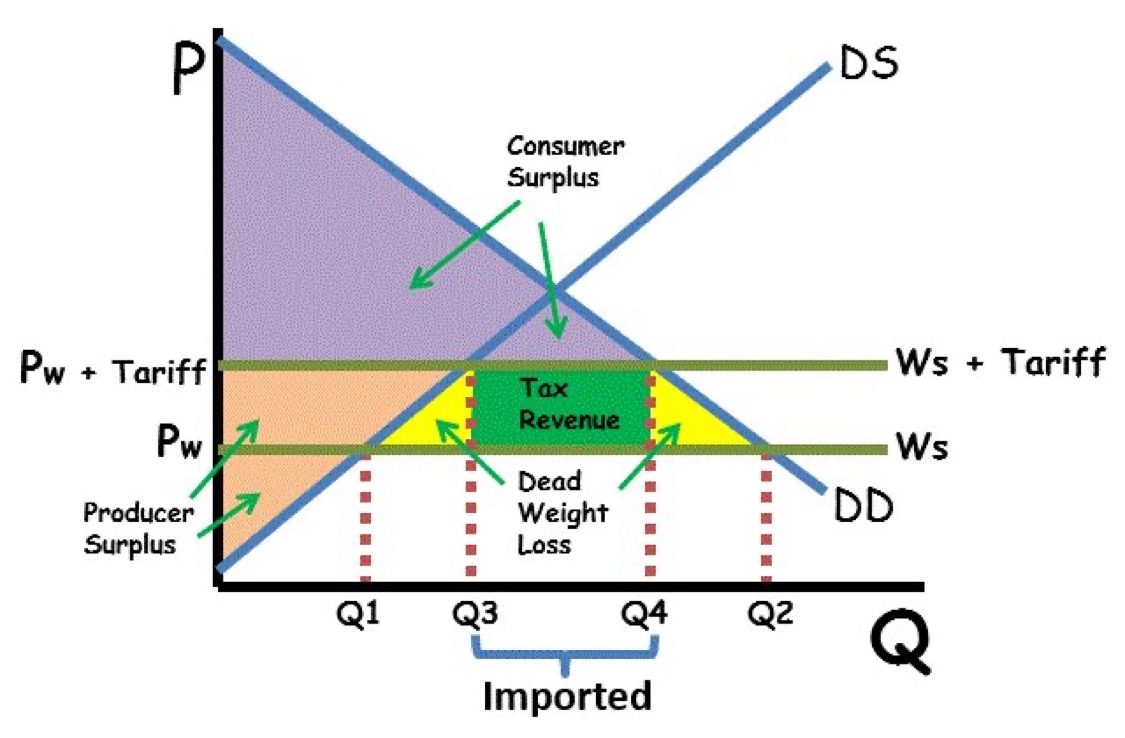
Now you’re really taking me back to my old macro lessons! And I’d reckon demand for mid to high end bikes is highly elastic too, so all this talk about passing on the cost increases in the expectation the purchaser will eat it seems a bit misguided. But I’m not a Trek/Specialized/etc. sales manager so maybe I’m wrong.
I’m good with either one.
(Sorry, couldn’t resist)
That’s a pretty good way to describe the current situation. For the sake of my sanity, I try to believe the tariff madness is primarily being used to disrupt the status quo and force some parties to the table. Without a compelling event, nothing ever changes. If the current administration actually think the broad use of tariffs are a good long term strategy, it’s going to be very ugly for a long time. It’s obviously going to be very painful for a while, I don’t think anyone knows how far the hole has to go before you can’t dig out. As you say, a very dangerous game of chicken with the world economy sitting in the middle.
Take off your accounting hat and put on your marketing/sales hat and it will make more sense. As someone else mentioned, it’s no different from some companies that used the “fuel surcharge” to point blame for price increases in the past. They are valid costs, but just another component of COGS. With tariffs being front and center in world news, it’s certainly smart to call it out in pricing and deflect some blame away from the company. But whatever tariff fee Trek (or whomever) is adding as a line item, that tariff fee was almost certainly determined by mixture of sales/product/finance people, not with some calculation of the actual tariff on an individual bike/component. They might put a tariff fee on a less elastic product even if it isn’t impacted.
And they might not add a tariff fee on something with a tariff if they don’t think it will sell at a higher price. Companies often use standard costing across their mixed inventory with some poor soul projecting what tariffs will be over the next 18-36 months (with another poor soul projecting demand based on a bunch of different pricing scenarios). And all of it’s changing daily.
Agree that it’s rare, but they are out there. I’ve seen gross margins much higher than that for cosmetics and skin care products. The packaging is usually the most expensive part (and it’s cheap). All their costs are marketing/sales/distribution. And not usually a luxury item, by many life science companies (pharma, etc.) also run high, but have huge R&D to recoup, so doesn’t seem as ridiculous as the makeup and skin care margins. So, if if you see Ulta tacking on a big tariff surcharge on that $50 bottle of whatever, you pretty much know it’s BS.
Well that’s what I mean, as a consumer, seeing that as a line item makes me feel like I’m getting absolutely hosed by the company. Same really goes for any other type of fee. Anytime a company advertises one price but then tacks on a bunch of fees at the point of sale I put them mentally in my scumbag company list.
Oh yeah…those margins are obscene. I was referring more to hard goods, durables, etc.
Generally not a fan of the practice either, but find it more an annoyance (and kind of expect it for many things). But I do think the tariff stuff brings a “deflection” dynamic that other fees might not have. The company is basically saying that the price is going up, but hoping people blame the government rather than it reflecting negatively on the company. For me, it’s not going to change my impression of the company either way. And maybe a byproduct of calling out the tariffs is some market outrage to put pressure on the government to bring some order ASAP.
generally I feel the same. In this specific situation, from the brand’s perspective, I think the surcharges make some sense because things are so fluid. It’s much easier to change/add/remove a surcharge compared to changing cost-of-goods and MSRP on many products when you have no idea how many times they might change in the next 90 days or six months.
From a consumer standpoint, it’s a drag to see some tacked-on fees, but I think the brands and retailers can do some work there to indicate “all purchases may be subject to surcharge” up front and lessen the nasty surprise. That prepares the consumer to accept some volatility. For me personally as a consumer, if I see the actual marked prices changing frequently, I feel like I never know if I’m really getting the best price, and it makes me wonder if I’m being taken advantage of. No easy solutions in these conditions!
Definitely! This is why I’m not in marketing. I feel like it’s kind of similar how car salesmen like to talk in monthly payments. For some people, hearing the small monthly payment is what really gets them. However, for other people they just want to know what the total price is. Gotta figure out which approach works for the most customers.
That’s not an accurate sentiment. You’re getting absolutely hosed, yes… by your government, which instituted a new tax on your imports with near-zero notice. Of course businesses have to recoup all or most of that cost… or they don’t stay in business.
The company is basically saying that the government IS to blame, 100% for that sudden increase in the price you pay. And they’re 100% right. The price of the product didn’t go up. Your taxes on it did.
If sales tax went up, would you blame the company? Probably not. This is just another tax.
Acknowledging that the tariff’s are implemented in poor practice, unreasonable, etc., I think many in the US would welcome more bike frames being fabricated in the US at a reasonable cost increase. Whether than can be done (at a reasonable cost), may not be possible in some cases. I’d be curious to know what the actual added cost would be.
When Allied recently announced/released their new gravel bike, many posters here expressed disappointment that the bikes are no longer fabricated in the US. Not to mention, the price didn’t seem to reflect the change in manufacturing location.
I personally try to purchase items made in the US whenever reasonably possible. My titanium bike was made in the US, as are my boots, truck/travel trailer, backpack/luggage, extensive home gym, and best tools. For all those items, I’m happy to pay a reasonable premium both in support for US manufacturing and also because items that are made in the US are often some of the best in quality. In fact, other than much of my Japanese clothing, most of the products I am most passionate about are all made in the US.. I draw a blank trying to think of something I really love, quality wise, that isn’t made here.. Of course, lots of cheap ‘good’ things are brought in for oversea’s, most of which serve their intended purpose perfectly well.
Trek tried it on their high-end bikes, reasoning that with the tariffs that existed at the time (many years ago), they could match the COGS. They eventually ended up shifting almost all that production back overseas.
Logic says that with even higher tariffs, it would be possible to match the same landed price now with US production…but either way, it ends up being a higher end price to the consumer…i.e. inflation.
Allied has been pretty open that the reason they switched manufacturing for the US was that they realized that others could simply do it better than them. I give them kudos for being so frank about the decision.
I saw a recent post on LinkedIn where the author was applauding the tariffs as a way that US companies could not compete in manufacturing for the toy industry. He laid out a case where what is now a $9.99 toy would cost $24.99 after the tariffs, and now US manufacturers could match those retail prices.
The fact that this guy could not see the obvious negative implications of that kind of inflation, while lauding changing to US manufacturing was kinda jaw-dropping. This was further compounded by the fact that he said it would only be possible with automated manufacturing…so really, not many new jobs.
So where is the net benefit of that scenario? (somewhat rhetorical, not directed towards you, @Trix8806 )
All good points and I agree. It’s the $10 toys and other ‘cheap crap’ that will really be hit the hardest. My comments on quality are really irrelevant to those types of items (and largely, electronics) as I don’t know that moving manufacturing to the US would even be noticeably improved. The $10 toys generally serve their purpose just fine.
For anyone interested, the podcast linked below covers the launch of the new bike and moving production to asia. In my working days, I had the opportunity to see manufacturing of all kinds of goods all over the world. Jet engines to crappy Walmart jewelry. There is junk made everywhere, including the US. And lots of high quality manufacturing in Asia. I toured the Allied facility near Bentonville last year as part of a public tour group. What I saw was extreme passion about cycling and making the best bikes possible, but the manufacturing practices were not impressive. Despite their best efforts, they were not in the same league as the companies who have been doing it in volume for decades.
Would I rather buy locally produced goods? Sure, if all else were equal. But at some point, it’s silly to force local buying if your neighboring city/state/country is fundamentally better at producing something than you are. Manufacturing is hard. To think we are just going to shift the manufacturing of some of these foreign made goods to the US in a matter of a couple years is silly. And I wouldn’t assume that’s the real agenda. Again, lots of dangerous games being played. I don’t believe much of what is being said publicly.
Why is everyone getting bent out of shape, the exporting country pays the tariff not the consumer. The president was very specific about this.
Seriously??? Who do you think will take the hit in covering this increase??
Not sure if you’re serious, but I urge a bit of research if you are taking that line for the truth.
Forgot the /s